
iGaming digital marketing is the work of helping an operator reach a relevant audience, explain its offering and measure how visitors use its website. For an operator planning organic growth, that starts with a clear market brief, useful content and a website that people can navigate. A list of marketing channels alone is not a strategy.
This guide focuses on SEO-led planning and the role of sports-streaming experiences. CD Marketing provides Google SEO for iGaming operators and sports match signal sources and dedicated streaming websites. The steps below help you define the work before choosing a supplier or commissioning more content.
Start with the audience and the business objective
Write down the countries and languages you intend to serve, the operator products involved and the action you want a visitor to take. An operator looking for a streaming supplier has a different need from a reader researching a sporting event. Their searches should lead to different pages.
For each proposed page, answer three questions: who is it for, what question does it answer, and what should the reader do next? Use these answers to decide whether the page needs a service explanation, a comparison, a practical guide or supporting information. Confirm market eligibility and the accuracy of product claims with the operator before publication.
Use competitor analysis to find useful gaps
Your search competitors are the websites appearing for the queries you want to serve. They may include specialist suppliers, publishers and comparison websites as well as other operators. A competitor list based only on familiar company names can miss the pages actually competing for attention.
Build a small comparison sheet for each priority topic. Record the competing URL, its audience, the question it answers, its format and what useful information is missing. Our competitor analysis service supports this assessment. The objective is to identify a better answer you can substantiate, rather than copy a competing article.
Give each SEO page a clear purpose
Map related searches to one primary page where they share the same intent. A service page should explain the service and the enquiry process. A supporting article should resolve a specific question and link to the relevant service when that helps the reader. Avoid publishing several near-identical introductions to iGaming marketing.
For example, a football-streaming service page can explain delivery options. A separate implementation guide could help an operator prepare its integration brief. Those pages have distinct jobs; repeating the same sales copy on both adds little value.
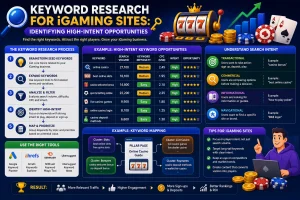
For further planning, see our guide to keyword research for iGaming sites. Prioritize relevance to the business rather than selecting a keyword only because it appears popular.
Make content and navigation easier to understand
Use descriptive page titles, clear headings and links that tell readers what they will find. Remove outdated service claims and replace vague promises with concrete scope. Make the next step easy to locate on mobile as well as desktop.
Check that important content is accessible to search engines and that the intended page is available for indexing. Google’s SEO Starter Guide explains these fundamentals. Search visibility is not guaranteed, and changes need time to be assessed.
Where sports streaming fits
Sports streaming is a separate website capability with its own delivery requirements. It should not be presented as a shortcut to Google rankings. An operator may want an API for an existing website or a dedicated website for its streaming service.
CD Marketing’s streaming API includes match signals and a basic schedule covering league names, club names, dates and times. Dedicated streaming website development is the other delivery option. Live scores and additional fixtures or data can be purchased separately; they are not the core streaming package.
For football match signal sources or cricket match signal sources, confirm coverage, delivery formats, delay, integration requirements and support during consultation. Keep those requirements separate from the SEO content plan so each part has an agreed scope.
Measure the right outcomes
Record a baseline before making changes. In Search Console, compare relevant pages and queries over consistent date ranges using impressions, clicks, click-through rate and average position. Separate brand searches from other searches and examine country and device differences where the data is sufficient.
Low clicks can have different causes. A page appearing far down the results needs a different investigation from a highly visible page with an unclear title. Use query and position evidence together rather than treating every low click-through rate as a reason to rewrite the description.
Where analytics and enquiry tracking are available, review whether the visits lead to relevant enquiries. Keep a change log so you know which pages were edited and when. Do not attribute every traffic movement to a single edit without considering other changes and the amount of data available.
Turn the plan into an implementation order
Start with the pages that explain your actual services. Record their current queries and visibility, correct unclear or unsupported claims, and check that the pages can be discovered through navigation and relevant articles. Then resolve technical barriers and expand supporting content where an unanswered customer question justifies it.
Assign an owner and an acceptance check to every action. For a content change, check the published wording, title and destination links. For a streaming project, separate the match signal source, API delivery or website build, basic schedule, and optional paid data in the brief. This makes it easier to compare completed work with the original requirement.
Prepare a focused project brief
- List the target markets, languages and intended audience.
- Share the priority services, current website and relevant search data.
- Identify existing content worth improving and claims that need correction.
- Define responsibilities for content approval and website implementation.
- For streaming, specify API integration or a dedicated website and the sports required.
- Agree what will be measured and when progress will be reviewed.
Contact CD Marketing to discuss an SEO or streaming brief. If you are comparing delivery options, our iGaming services buyer’s guide explains the questions to ask before work begins.
For the services available to your business, explore our online casino marketing services or sportsbook marketing services. Both explain CD Marketing’s SEO specialization; the sportsbook page also covers match signal and streaming website projects.
For an overview of the work CD Marketing provides, see our iGaming marketing agency services and discuss the SEO or match streaming scope your business needs.